Mrai

Non-Ferrous Metals

India has emerged as a key producer and recycler of non-ferrous metals such as aluminium, copper, brass, zinc, lead, nickel, and tin — all of which play an essential role in driving the nation’s growth and advancing the circular economy. Non-ferrous metals, unlike ferrous counterparts, are nonmagnetic, corrosion-resistant, and prized for their strength, conductivity, and recyclability — making them vital for sustainable manufacturing. These metals form the backbone of industries like construction, transportation, power, manufacturing, and packaging. From smart grids and electric vehicles to renewable energy systems and modern urban infrastructure, non-ferrous metals are indispensable for applications that demand superior strength, conductivity, and durability.
MRAI’s Role

The Material Recycling Association of India (MRAI) serves as the apex national association representing the interests of the non-ferrous metal recycling sector. MRAI acts as a vital bridge between the recycling industry and key policymakers, driving constructive engagement to strengthen India’s resource efficiency and circular economy framework. MRAI actively liaises with the Ministry of Mines, Ministry of Finance, Ministry of Commerce & Industry, Ministry of Environment, Forest and Climate Change (MoEFCC), and the Bureau of Indian Standards (BIS) on matters crucial to the non-ferrous recycling ecosystem. Through sustained policy dialogue and representation, MRAI works towards building a regulatory and trade environment that supports responsible recycling and sustainable industrial growth.

MRAI’s Key Focus Areas

01

Policy Advocacy

Engaging with ministries and regulators to recommend rationalized import duties, scrap trade facilitation, and ease of doing business measures to strengthen domestic recycling.

02

Regulatory Liaison

Coordinating with MoEFCC, CPCB, and SPCBs on waste management policies, EPR implementation, and environmental compliance. Supporting BIS in developing and harmonizing recycling-related standards.

03

Industry Representation

Presenting the sector’s views in government consultations, interministerial committees, and stakeholder meetings to ensure industry friendly policy decisions.

04

Capacity Building & Networking

Organizing national and international conferences, workshops, and stakeholder dialogues that facilitate policy discussions and networking opportunities.

05

Promotion of Circular Economy & Sustainability

Advocating for the integration of circular economy principles and sustainable production practices to minimize carbon footprint and resource dependence.

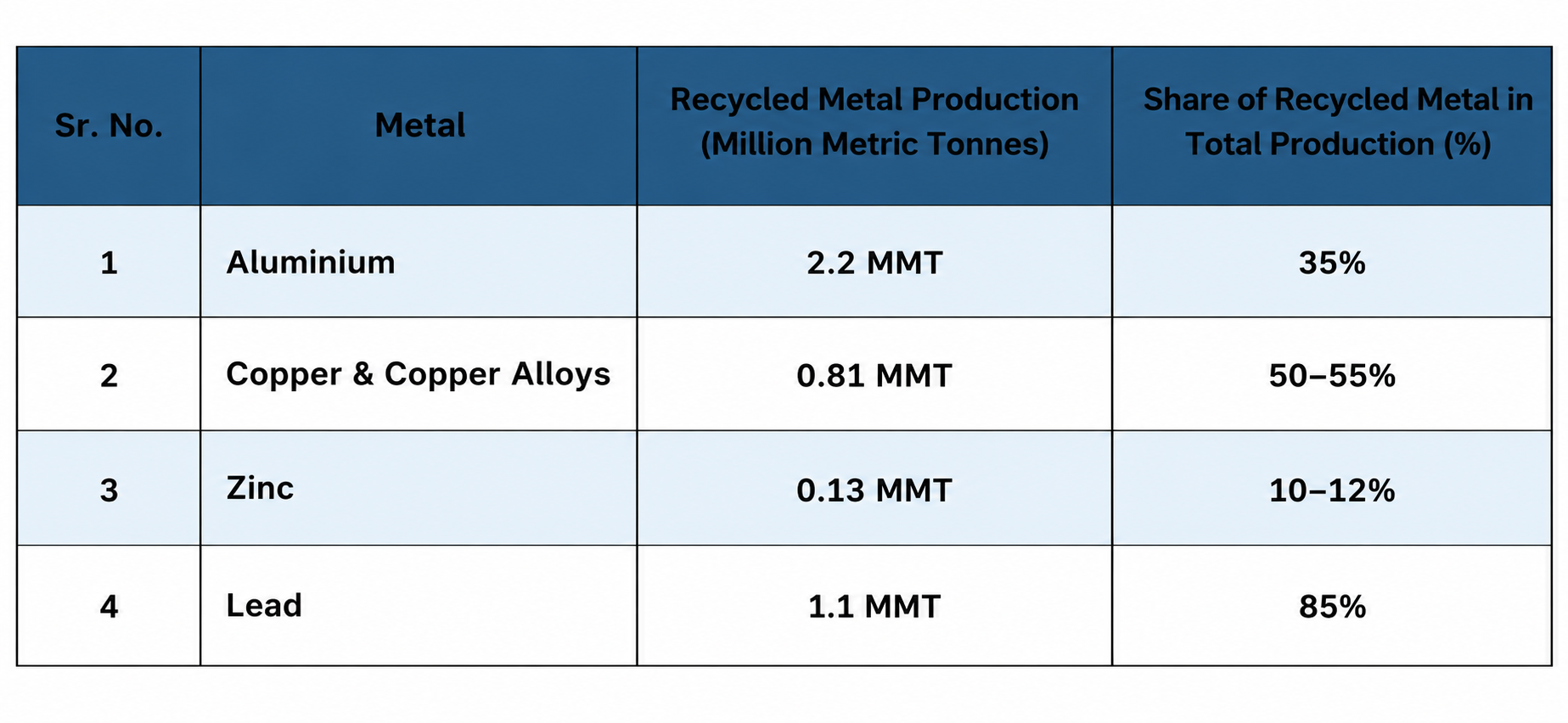
India’s Production Data

India's non-ferrous secondary production and share in total production

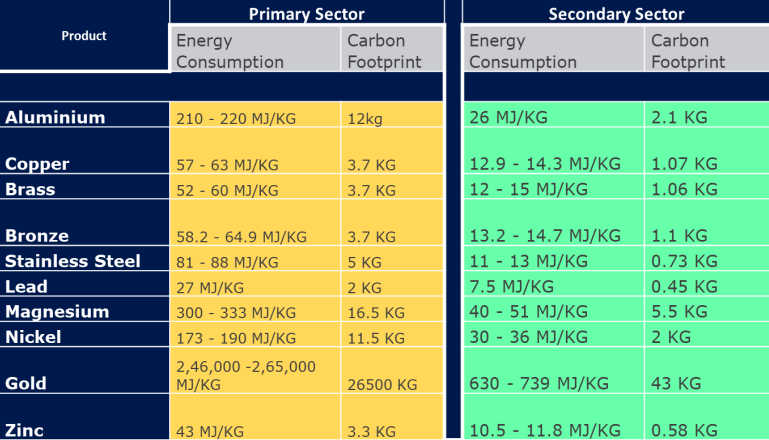
Recycling Benefits

Recycling Benefits: energy consumption and carbon footprint, primary vs secondary sector

Chairman’s Quote

Aluminium Committee Chair

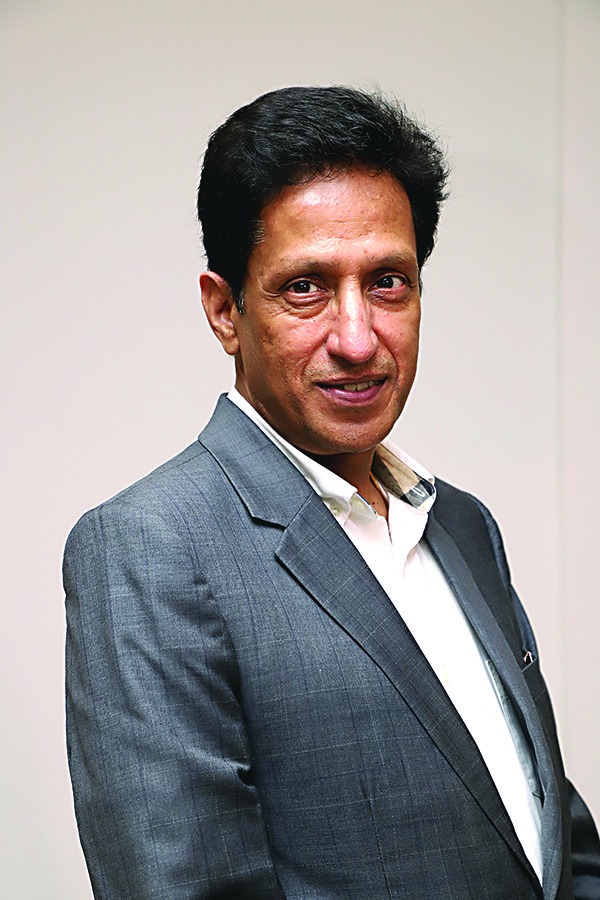
Mohan Agarwal MA

Recycled aluminium saves up to 95% of the energy used in primary production. Together, we are building India’s circular future.

Mohan Agarwal CMD, CMR Green Technologies

Copper & Copper Alloys Committee Chair

Dhawal Shah DS

Copper is the backbone of India’s energy transition. Responsible recycling will secure its supply for generations to come.

Dhawal Shah Partner, Metco Ventures LLP

Zinc Committee Chair

Anirudh Jhunjhunwala AJ

Zinc recycling protects our infrastructure and our environment. Strong industry and policy collaboration will drive sustainable growth.

Anirudh Jhunjhunwala MD & CEO, JG Chemicals Limited

Strategic Importance of Key Non-Ferrous Metals

As India accelerates its shift towards net-zero emissions, circular economy, and infrastructure modernization, the non-ferrous sector has emerged as a strategically critical industry. It supports national initiatives like Make in India, Atmanirbhar Bharat, and Net Zero Goal 2070.

Al Aluminium A strategic metal central to transportation, construction, packaging, and renewable energy equipment.
Cu Copper The metal of the future, crucial for electrical wiring, EV motors, renewable power transmission, and energy storage.
CuZn Brass A copper–zinc alloy vital for plumbing, electrical systems, and architecture due to its strength, malleability, and corrosion resistance.
Pb Lead A key enabler of energy storage in batteries, especially for automotive, telecom, and backup power systems.
Zn Zinc Integral to galvanization and corrosion protection, ensuring longevity of infrastructure, roads, and bridges.
Ni Nickel A cornerstone of stainless steel and clean energy technologies, valued for its durability, heat resistance, and corrosion protection. Crucial for EV batteries, renewable systems, and aerospace components.
Sn Tin A key metal, essential for soldering in electronics, food-grade packaging, and coatings and alloying that enhance corrosion resistance and material bonding.
Co Cobalt A strategic metal primarily used in rechargeable batteries, especially for electric vehicles, and in superalloys for jet engines and industrial turbines.
Mn Manganese Essential for producing high-strength steel and aluminium alloys; also used in batteries, fertilizers, and chemicals for water treatment.
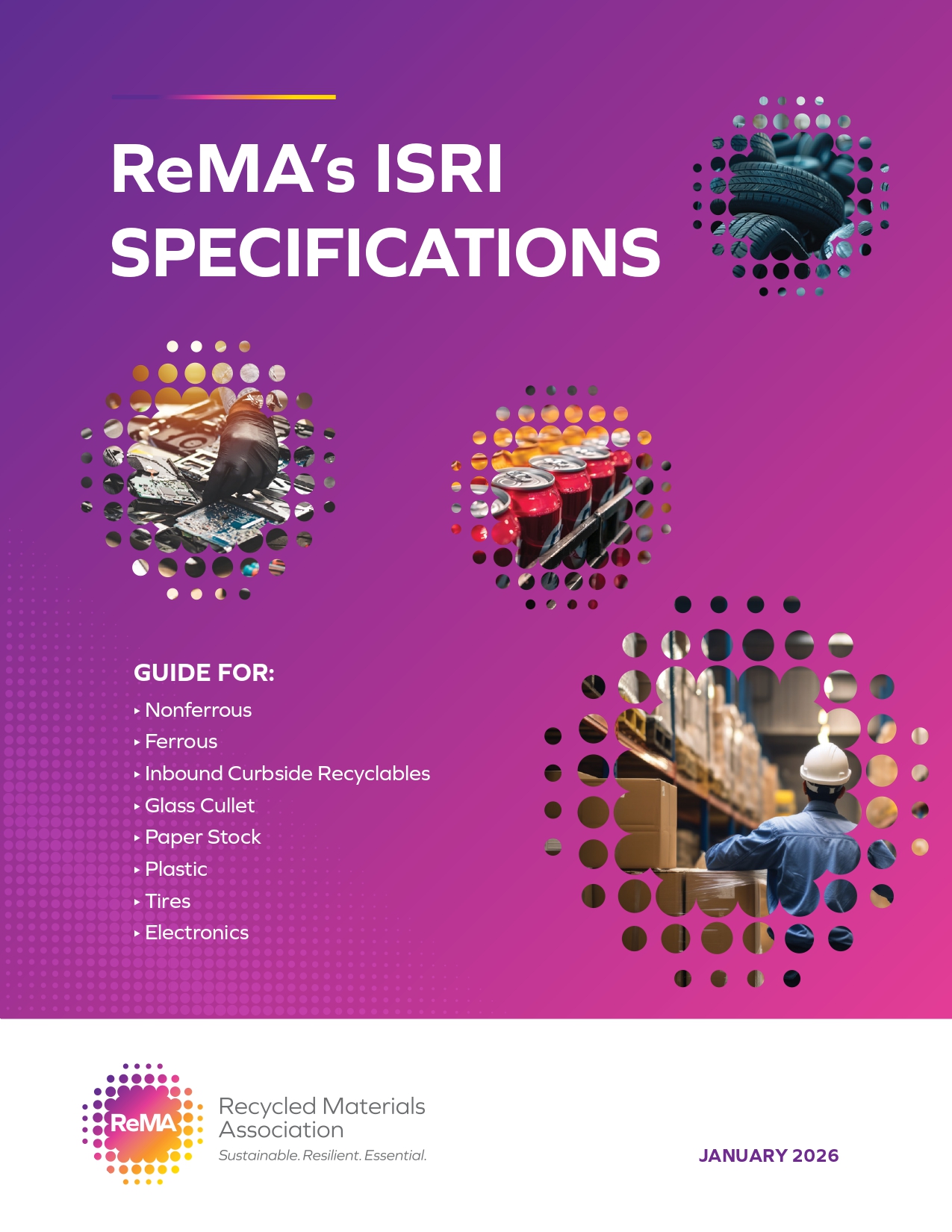
ISRI (ReMA) Scrap Specifications January 2026 View PDF

Types & Grades

ISRI (ReMA) Scrap Specifications

The ISRI (ReMA) specifications are globally recognized standards that define the quality and composition of these scrap materials, helping recyclers, traders, and smelters maintain uniformity in trade. Following is the list of key scrap grades.

Recycling Process and Technologies in Non-Ferrous Metals

The recycling of non-ferrous metals is a technologically advanced and resource-efficient process that enables continuous recovery and reuse of valuable materials, contributing significantly to India’s circular economy. The process typically involves the following stages and technologies:

1

Sorting and Dismantling :

Recycling begins with the systematic collection, sorting, and dismantling of scrap materials. Advanced sensor-based sorting systems, such as X-ray fluorescence (XRF), optical sensors, and near-infrared (NIR) scanners, are increasingly used to identify and separate various non-ferrous metals — including aluminium, copper, zinc, lead, and nickel — from mixed waste streams and other recyclables like plastics or glass.

2

Baling :

Once segregated, the non-ferrous scrap is compacted into high-density bales using hydraulic baling presses. This reduces volume, optimizes storage and logistics, and facilitates easier transportation to processing units.

3

Shearing :

Hydraulic shears and guillotines cut oversized scrap into manageable pieces, preparing the material for downstream processing. This mechanical step improves handling efficiency and furnace feedstock consistency.

4

Shredding and Magnetic Separation :

High-speed hammermill shredders or rotary shredders are used to break down materials into smaller fragments. Integrated magnetic drum separators remove ferrous contaminants, ensuring a clean stream of non-ferrous metals ready for further refinement.

5

Advanced Separation and Refinement :

To achieve high recovery and purity levels, recyclers employ technologies such as: Eddy Current Separators (ECS): for automatic separation of non-ferrous metals from mixed residues. Air Classification Systems: for density-based separation. Electrostatic and Sensor-Based Sorting: to isolate metals with similar physical properties. These technologies ensure maximum material recovery and quality enhancement for secondary metal production.

6

Melting and Casting :

The refined metal fractions are melted in reverberatory, rotary, or induction furnaces under controlled atmospheres to maintain alloy integrity and minimize emissions. The molten metal is then cast into ingots, billets, or slabs, which serve as feedstock for foundries and rolling mills. These are later transformed into sheets, tubes, rods, and other products for use across construction, automotive, electrical, and manufacturing industries.